

Let's play pretend for a second. You're going on a camping trip with two of your best friends. Your first friend is the one who suggests camping under the stars, cooking on an iron skillet, and foraging for your food. This is the friend who prefers to do things the slow way, and they say stuff like, “The journey is the best part.”
On the other hand, you have your high-tech camper friend. You know, the one who is prepared for everything with a gadget or solution. They bring a battery-operated fan for warm weather, an electric blanket for a potential cold spell, moisture-wicking socks, and a solar-powered bug zapper to take care of any flying pests around the campsite.
These two friends both have their place on your camping trip. One takes a more naturalistic approach, while the other offers an efficient solution to just about any problem.
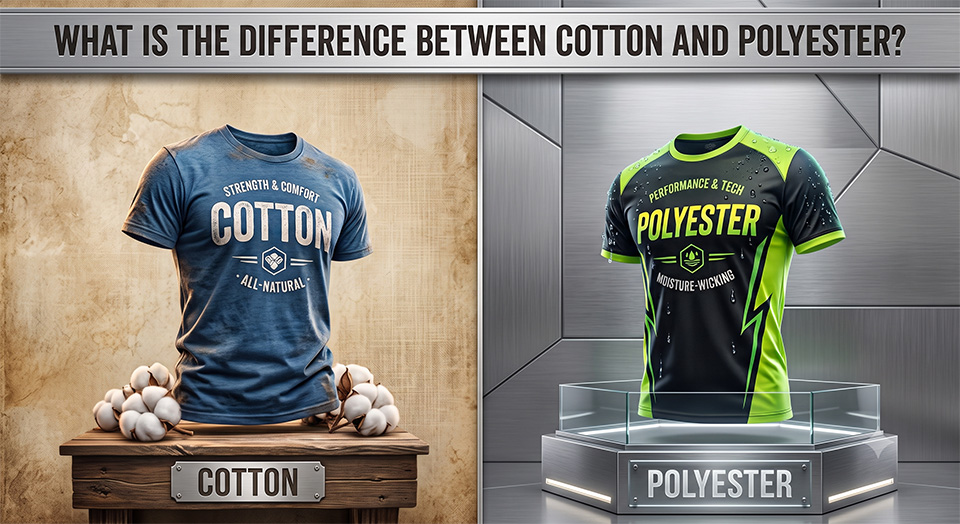
These friends are cotton and polyester. Both fabrics have worked their way up and earned their permanent spots in the apparel world, but they bring different strengths to the table.
If you're stocking your inventory for a screen printing shop, designing custom merch, or dipping your toes into t-shirt design as a budding hobbyist, you'll want to know the difference between these two core fabrics.
If you're stocking your inventory for a screen printing shop, designing custom merch, or dipping your toes into t-shirt design as a budding hobbyist, you'll want to know the difference between these two core fabrics.
Is polyester good for screen printing? Should I only wear 100% cotton t-shirts? Is polyester better than cotton?
We've heard all these questions a thousand times and more!
That's why we're tackling this important fabric fight. We won't tell you which one is better, but we will let you know which one is right for you to help you make the best decision for your inventory, customers, event, or t-shirt ambitions.
Everyone, take a deep breath. Let's dive into finally answering the question, “What's the difference between cotton and polyester?”
Cotton: Classic, Natural, Crowd Favorite
Cotton has been around the block a time or two. In fact, it's been used in textiles for thousands of years, and for good reason. Cotton is a natural fiber found in warmer climates around the world. Back in the day, the ancient Egyptians used this incredible fiber to weave linens, apparel, and tapestries.
This natural fiber produces a soft, breathable material that feels great on the skin. It absorbs moisture rather than repelling it, making it feel cool and comfortable for everyday wear.
Cotton is one of the most trusted, well-researched materials in the world of textiles. I guess when you live to be a few thousand years old, you earn a reputation one way or another. Fortunately for cotton, it's got an excellent track record of comfort, temperature regulation, and breathability.
Cotton comes in several forms and quality levels. Despite being a natural fiber, harvesting and processing this material takes time and hard work before it becomes your favorite t-shirt.
As cotton fibers age, their softness increases. The more it's washed, handled, used, and worn, the softer and more comfortable it becomes.
It's kind of like a rubber band that's been stretched over and over again, only in this case it's a good thing! This is also why cotton that undergoes more extensive processing often produces softer garments. For example, the Bella + Canvas 3001 is produced through an extensive process in which the cotton fibers are combed and ringspun, softening them for that gently worn-in feel.
For casual apparel, retail merchandise, and home hobbyist t-shirts, cotton is a classic option that's pretty hard to beat. They're breathable, adaptable, and incredibly versatile in terms of customization. That and being pretty darn comfortable. It's really no wonder cotton has made such an impact on the world for thousands of years.
Polyester: The Performance-Maxer
Alright, we're just going to say it.
Polyester is an overachiever in the fabric world.
While cotton comes from a plant, polyester is a synthetic fiber made from petroleum-based elements. The most common type of polyester used in apparel is polyethylene terephthalate (PET). It's a sturdy, durable, and surprisingly flexible material.
Manufacturers melt down the raw materials, and in some cases, recycled containers, and extrude them into ultra-fine fibers. These fibers are then stretched for strength and spun into yarn that can be used to make fabric. The result is a lightweight, resilient material that's shrink-resistant, avoids wrinkling, and holds its shape even after repeated use.
Several polyester manufacturers use recycled materials, such as used plastic bottles, to produce polyester fabrics. This prevents unnecessary use of virgin petroleum resources, making it a potentially eco-conscious product. Be sure to check the individual manufacturer’s policies and procedures, though.
Unlike cotton, polyesters absorb very little water, making them a first choice for performance fabrics, athletic t-shirts, and moisture-wicking apparel. Instead of being absorbed into the fibers, moisture slides right off, where it can evaporate quickly. That really comes in handy for warm summer days or working up a sweat in the gym.
Polyester is the reason your gym clothes feel like they dry out just minutes after you're back from a run. It's a powerful performance fabric that's flexible, lightweight, and versatile. Not to mention it's compatible with multiple customization methods, like screen printing or sublimation!
All around, polyester is a fairly adaptable material that works hard and plays hard.
Speed Round: Is Polyester or Cotton More Breathable?
Some shoppers think that moisture-wicking means breathable, but they're not the same thing. Cotton is more breathable because it has natural airflow between the fibers, even in tight weaves. However, polyester offers moisture we can use, given the nature of its fibers.
If it helps, think of cotton like a sponge. It's going to be super absorbent, with lots of holes for consistent airflow.
Think of polyester as a rain jacket. Moisture won't get very far because it'll slide off before it reaches you. It won't have many air holes, so it won't be naturally breathable like cotton.
That being said, certain polyester materials are more breathable than others. For example, the Sport-Tek ST350 PosiCharge Competitor 100% Polyester T-Shirt. This t-shirt features polyester interlock fabric, which has built-in minute air holes for better breathability.
Does Cotton or Polyester Print Better?
This one's a draw, or a tie, if you will.
And in this case, that's totally a good thing.
Cotton has long held the title of supreme printing surface, because it's what everyone knows. The natural fibers absorb ink beautifully, creating vibrant colors and crisp designs that hold up over time. This makes cotton an excellent option for bold designs, eye-catching graphics, or trendy retail merchandise.
Polyester shirts are better suited for sublimation printing, in which the image is infused directly into the fabric. Polyester’s synthetic fibers fuse with the image, producing a clean, sleek graphic that retains its details even after multiple washes and wears.
Polyester is also typically a first choice for heat transfers, embroidery, and direct-to-garment printing, making it a decently versatile alternative to cotton.
Are Cotton/Poly Blends Good T-shirts?
Certainly! Cotton-polyester blends often make some of the most popular t-shirts. Most customers find that blending cotton and polyester fibers produces a shirt that offers benefits from both. You'll get the soft, gentle feel of cotton, with the capabilities of polyester thrown in.
By blending these two materials, you produce a flexible yet durable garment. Which makes it great for promotional materials, mass marketing campaigns, sponsored events- you name it!
It's kind of like the perfect pairing of wine and cheese. They're both great on their own, but when you bring them together, you've got a stunning combo.
Which is Better?
It totally depends on your intended use and desired outcomes.
We're not saying that as a cop-out, but your goal truly matters in determining whether polyester or cotton is right for you.
If you run a wellness clinic, fitness brand, or outdoor sponsored event in the heat, a polyester option might be better suited for your needs.
If you're looking for something adaptable, breathable, and universally loved, cotton is the better bet.
The good news is, we've plenty of both options right here at Blankapparel.com! Check out the entire collection for your favorite fabric today.
New comment
Comments